Allergen Information on a Restaurant Menu
Updated October 27, 2026
Guests want to know what is in a dish before they order. Some need it for their health, some for their religion or diet, and some just want to know what they are eating. Allergens, additives and dish characteristics answer three different questions, and a good menu shows all three.
Allergens, additives and characteristics: what is the difference?
- Allergens are ingredients that can cause a reaction, such as milk, eggs, fish or nuts. They tell a guest what to avoid.
- Additives are substances added to food, such as preservatives, colorings or sweeteners. Some countries require you to declare them on the menu.
- Characteristics describe the dish, such as vegan, halal, spicy or homemade. They tell a guest what the dish is.
Keep the three apart. A guest with an allergy looks for allergens, a vegetarian looks for characteristics, and mixing them in one line makes both harder to read.
Allergens
Allergen information is the one that matters most, and in many countries it is a legal duty for restaurants. The rules differ from country to country, so check what applies to you. This guide is general information, not legal advice.
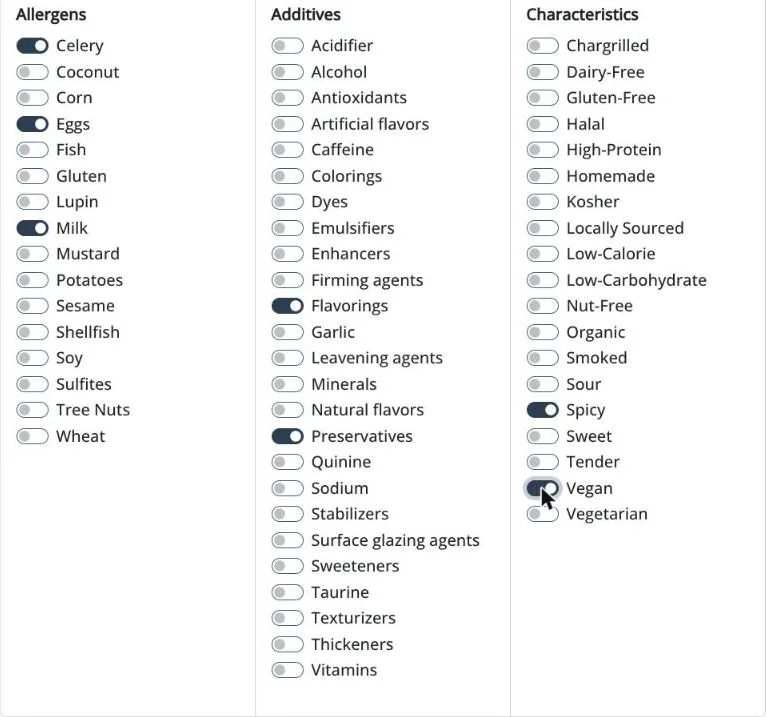
In MenuHatch you choose from 16 allergens: milk, eggs, fish, shellfish, tree nuts, soy, wheat, gluten, sesame, mustard, celery, lupin, sulfites, corn, coconut and potatoes.
Good practice
- Mark allergens per dish, not per menu. A general note such as "ask your waiter" does not replace it.
- Check the recipe, not the name. A sauce, a stock or a dressing often hides milk, celery, mustard or gluten.
- Update the menu when a recipe or supplier changes. An outdated allergen list is worse than none.
- Tell guests with a serious allergy to speak to your staff. A menu cannot cover cross-contact in the kitchen.
Additives
Additives are less known to guests but required to be shown in some countries. Germany, for example, expects them to be marked on the menu. Ask your authority or your supplier what applies to you.
MenuHatch offers 25 additive labels, including preservatives, colorings, flavorings, sweeteners, thickeners, emulsifiers, antioxidants and flavor enhancers, as well as vitamins, minerals, sodium, caffeine, taurine, quinine and alcohol.
Dish characteristics
Characteristics help guests choose faster. They are not a legal requirement, but they answer the questions your staff hears all day: is this vegan, is it spicy, is it halal?
MenuHatch offers 19: vegetarian, vegan, gluten-free, dairy-free, nut-free, halal, kosher, spicy, sweet, sour, low-calorie, high-protein, low-carbohydrate, organic, locally sourced, homemade, smoked, chargrilled and tender.
Only use a label you can stand behind. "Vegan", "gluten-free" and "nut-free" are promises, and a guest with a restriction will rely on them.
How to add them to a QR code menu
- Open a dish in the menu editor.
- Select its allergens, additives and characteristics from the lists. The lists are fixed, so you pick from them and do not type your own.
- Save. The labels appear in the dish details when a guest opens the dish on the menu.
The label names are translated into every language of your menu. A guest who reads the menu in German sees the allergens in German, without any extra work on your side. More on this in the guide to a multilingual restaurant menu.
Frequently asked questions
Do I have to show allergens on my menu?
In many countries yes, in writing or by a clear pointer to where guests can get the information. Rules differ, so check with your local authority.
Can I add an allergen that is not in the list?
The lists are fixed. For anything else, use the dish description.
Do I need to enter them for every dish?
Yes, per dish. Dishes without labels show no information, so go through the whole menu once and keep it up to date after that.
Show allergens on your QR code menu
Build your menu, add allergens, additives and dish labels, and let your guests read them in their own language. Start with a free trial, no commitment.
Start free trial See pricing